A Foreign Affair Also Known as 2 Brothers & a Bride
The film, A Foreign Affair (2003) had its premier in 2003 at Sundance. The film was also known as 2 Brothers & a Bride.
The was the official website for A Foreign Affair.
Content is from the site's 2003 archived pages and other outside sources.
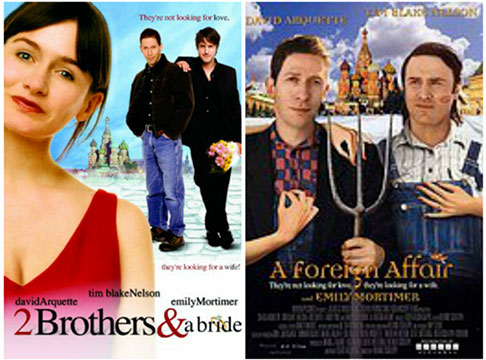
Rating: PG-13
Genre: Comedy
Directed By: Helmut Schleppi
Written By: Geert Heetebrij
In Theaters: Jan 21, 2003 Wide
On Disc/Streaming: Jul 6, 2004


Two men look for a wife -- just one will do, thank you -- in this offbeat comedy. Jake (Tim Blake Nelson) and Josh (David Arquette) are two brothers who live and work in a vegetable farm somewhere in the Midwest, where they're looked after by their Ma (Lois Smith), who cooks, cleans, and keeps the guys company. When Ma dies, Jake and Josh find they're a bit lonely all by their lonesome, and more importantly, they're not much good at everyday domestic activities, so they decide to do the sensible thing -- one of them will get married so they'll have someone else to talk to and handle things in the kitchen and the laundry room. Woefully naïve, socially clumsy, and less interested in romance than day-to-day practicalities, Jake and Josh decide to head out on a matchmaking tour to St. Petersburg, Russia, where they're promised introductions to hundreds of women over the space of two weeks, in hopes that they'll find an understanding, old-fashioned wife who doesn't mind having a third wheel around at all times. A Foreign Affair was shot on location in St. Petersburg in the former Soviet Union, and in Chihuahua, Mexico, which stood in for the United States.
A Foreign Affair Trailer
Trailer for Two Brothers and a Bride
The RomanceTour that Became a Movie
Two Midwest brothers urgently need household help.
They decide to join a matchmaking trip to Russia to find and bring home a traditionally minded housewife.
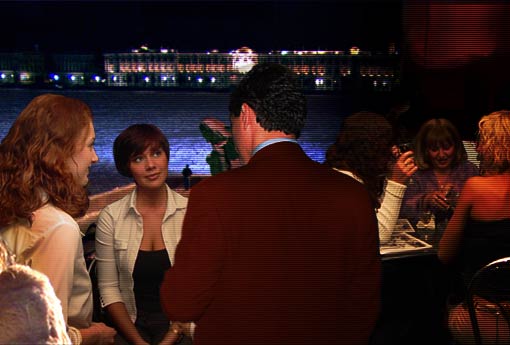
Welcome to St. Petersburg: A thousand fine women and two weeks to pick one.
Stay focused.
Actual tour clients and would-be brides appear as extras as A Foreign Affair was shot during a real St. Petersburg romance tour.
First time filmmakers in a Russian winter: temperatures of minus 20 C; six hours of daylight; vodka and warm soup.
A Foreign Affair was shot entirely on locations in St. Petersburg, Russia and the state of Chihuahua, Mexico
Production Notes on 'A Foreign Affair'
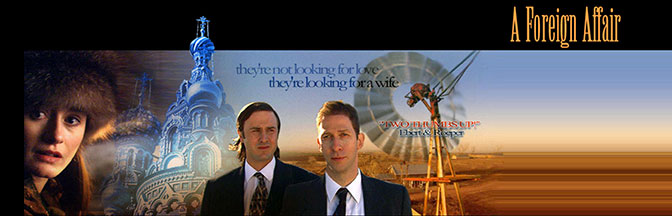
1. The Dream
The idea took shape when Geert Heetebrij and I met in the January of 1999. Geert was working as a story-editor in Hollywood. I had just sold my Dutch-based production-company. Both of us were looking for new adventures. Making a movie was a dream we both shared. I decided to move to LA as well, bringing my wife and kids. I allowed myself three years to dedicate to this new dream.
Geert had a story about the concept of mail order brides on the Internet that he really wanted to explore. He started working on an outline in the summer of 2000.
Meanwhile I was asked to film a commercial for a winery in Perth, Australia. It would be produced by Bijker Productions, a Dutch production company owned by Dirk Jan Bijker. Dirk-Jan and I had been good friends for many years. I told Dirk-Jan about the 'movie-plans'. He liked the idea, himself having dreamed about making movies for quite some time already. After a few evenings with great wine, Dirk-Jan and his wife Tonneke decided to become an essential part of this adventure. Now there were four people carrying this project, pouring in ideas, time and money.
Conceptualizing the set-up on the farm went pretty smooth. Geert's wife had grown up in the Midwest, spending many a summer around her grandparent's roadside vegetable farm stand. More difficult were the scenes that would happen during the romance tour in Russia.
Now Geert and I had been making some documentaries together in previous years. We had experienced the narrative power and emotional energy of a 'real' story. We figured the only way to get a real 'feel' for the story, was to join a real romance tour. We contacted 'A Foreign Affair', one of the biggest companies that organize these Romance Tours, and they were happy to help us out, and so we joined their romance tour in February (after an explicit 'OK' from our wives).
2. Doing the research
Arriving at the airport of St. Petersburg, Russia was exciting. From now on Geert and I would try to perceive this trip as if we were Jake and Josh. How would these brothers go through all this, was the question we constantly asked ourselves.
On the way out of the bagage claim, we followed a foreign TV crew packed to the hilt with equipment, wondering how they would make their way through Russian customs. Very smoothly, as it turned out, so we immediately introduced ourselves to their local liaison, Sergei. He ended up being Emily Mortimer's location manager during the making of her documentary.
The A Foreign Affair tour company makes your adventures start with a first trip in the bus, the first visit to the AFA office and of course the first night in a Russian hotel.
In the bus we found out how fairytale-like St. Petersburg could be in the winter. There was ice everywhere. Lit by weak blue-ish sunlight it all looked picturesque, unreal almost, until you had to get out of the bus and encountered the icy winds. 'Quite a contrast with the Midwest', Geert concluded with a happy smile. This movie would be something different…
AFA's Russian office manager opened the door at their office in the hotel. In perfect English and smooth smiles he explained to us how to get through the thousands and thousands of profiles with great efficiency. Showing us 'fast tricks' on the computer, and handing us maps with the newest profiles. We got a chance to talk to other tour members. Some had no time to talk, too busy rushing through the countless pictures of beautiful, marriage-minded women. 'Man, this is like being a kid in a candy store', John (54) shared. He was overweight, looked exhausted. His head had turned from red to almost purple. I was a little concerned.
That night we drank Russian beer, chatting with the tour clients. Ken (owner AFA) introduced us to the group, and shared some of his knowledge about the tricks of getting a Russian wife.
Some of the clients wanted to know if we were just researching, or if we were also going to date… As researchers they liked us better.
Back in our hotel room for three minutes, we heard the phone ring. 'Do you want us to send a young lady to your room..?' a friendly voice asked. Geert said 'No thank you'. I asked him 'who was that?' 'Room service' he answered, and started making notes. The first Russian script-pages were born.
3. Angela
The next days were like studying human wildlife. The clients, all with impressive professional resumes, seemed to get a real ego-boost from this adventure. Some told us that they were about to find out who they really were. They had met their deepest drives. From now on they would stop thinking before acting. They would totally trust their instincts, and follow 'the forces' they discovered inside themselves.
Some of them shared with us how for the first time in years they dared to dance again. Without having to get drunk first. A 35-year old American was wondering how his friends back home would react if he brought this beautiful 18-year old redhead back to California with him. But would she even stay? Or would she take off with the first surfer dude she'd meet? Tough questions. "She's like a young colt, charging through life", he concluded to fellow tour clients, "and I need to tame her." An ex-marine explained to us how strategic it was that after losing the cold war, American men were invading Russia to take the elite of the Russian gene pool home. We ran out of notebooks. Already there was too much material to choose from.
The third day we ran into 'Angela', an elegant French journalist, funny and very driven. She'd just spend 6 months undercover in Chechnya, covering the war there. She was also an angry person, and this new assignment wasn't helping; she was deeply offended at the romance tour phenomenon, probably the reason her magazine had sent her to St. Petersburg in the first place.
Strangely enough she seemed to like us, and she was very amused by the idea that we as married men had chosen this path full of potential pitfalls that could destroy the trust that our wives had in us. She admired our wives. Maybe they were just naive. She would keep an eye on us, and saw it as her mission to influence the script in every way possible. 'Men are beasts, and you should show that in your movie…'
She would like to see someone like herself in the movie; she offered to play that part, just in case we would not be able to find someone else.
4. Socials
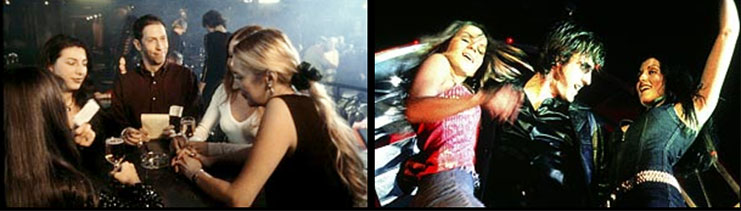
Ken had promised us that attending socials would be the highlight of our time with AFA. And so we were sitting in the bus, heading for the Hollywood Nightclub, joined by 13 giggling men, joking and bragging to each other on how they were going to score big tonight. Ken warned the men about 'players'; women who looked great, acted nice, and tell whatever you wanted to hear, but were just interested in the game; getting a free date with a westerner. For these women catching the men was the most interesting part…
Entering the Hollywood Nightclub was like entering another world. None of the men had been in such a great position before. About 200 women were waiting, totally dedicated to the 13 tour clients. Some of the men became a little nervous. They huddled in packs near the bar, staring at the beauties around them. Some warned each other of the danger of walking the long dark hallway to the bathroom. 'Maybe this is how women feel in clubs back home', Nolan (a computer programmer from Seattle) giggled.
Geert and I decided to split up and talk with women. After all, we also needed to get their side of the story. Disappointed we weren't really looking for a wife, they still got a kick out of the idea for a film, and were very eager to tell us about themselves. But others would just try to drag us to the dance floor. We figured that dancing with a few ladies would also be research.
The days of our research trip went by very fast. If we weren't talking to tour clients or would-be brides, we did some pre-production scouting around St. Petersburg, finding and photographing scene locations; we visited the city's Theatrical Institute looking for actresses, sat in on acting classes. We went to Lenin Film Studios looking for an experienced local line-producer, and visited film schools looking for crew and affordable equipment.
By trip's end, the majority of the men had had a fantastic time. Some had forgotten everything about their original mission. They went home alone. Ken assured them that they could always come back and try again. Others left engaged.
We said goodbye to our French colleague, and left with more than enough facts and wisdom to make this script unique.

5. Preproduction
Once home we realized that this movie would be at its best if it became something like a documentary with actors. It would be great to use real environments as backgrounds, real 'clients' as extras. It would have a big impact on the scheduling, but the energy in the scenes would be much more intense.
Geert started writing. During that time Dirk-Jan and Tonneke flew in quite a few times to go through the story, and to try to add layers to the script. We hoped that this would become a unique piece of work, for an international audience. The arena seemed to have endless possibilities.
In late July the script was at a stage in which we could present it to people.
Initially we intended on making this with unknown actors, but Hollywood veterans we talked to urged us to having at least one 'name' actor; it would dramatically increase chances to get distribution. We decided to test our luck by sending the script to some agencies.
It worked. In August we got a call from UTA. Tim Blake Nelson wanted to meet us.
Tim turned out to be a very energetic man, a passionate moviemaker, a fast mind pouring out ideas. It was clear to us that with Tim we would add another powerful engine to our little project.
We had left open to him which of the two brothers to play, and Tim was interested in playing the role of the older brother. Already during that first meeting he mentioned his friend David Arquette as a possibility for the younger brother. At the same time, Tim was trying to size us up, wondering if these Dutch documentary makers had it in them to pull off a first feature.
Following our meeting with Tim, we found our line-producer Amy Segal on the Internet. Amy liked the story and loved Russia. Being energetic, and very experienced with film-production overseas (involved with productions as James Bond, Anna and the King, etc.), Amy turned out to be the ideal candidate to pull off the practical aspects of this adventure.
6. Nightmares
Come September, Tim Blake Nelson said he was 'in' as Jake Adams, and it was almost sure that David Arquette would play the part of Josh. David's manager Steven Siebert loved the project. He and Howard Cohen (UTA) became great resources whenever we encountered complex legal issues.
We kept updating Dirk-Jan and Tonneke about all the things that happened. Many weekends, they came over from Holland. We had a lot of ideas. It looked like we were close to realizing our dream. Then, the events of September 11th hit. Instantly, our dream became an absurd little thought in that context. Maybe this was no longer something worth to pursue.
A few days later Tim called from the Toronto film festival where he and David Arquette had gotten stuck. Chances were very slim that he or David would still fly to Russia. He would talk it over with David, but wasn't very optimistic.
I called Dirk-Jan to update him about the situation. He still wanted to pursue the project, and started to brainstorm about the options left. 'If they still decide to fly, there is nothing that can stop us anymore…' he concluded.
A few weeks later Tim called with good news. He and David were still planning to go with us to St Petersburg. We would leave in December.
I called Dirk-Jan. He was excited. We brainstormed a few hours about the latest version of the script. He wanted to plan a meeting with everybody involved. This would happen in LA. A couple days later his wife called. Dirk-Jan had passed away that night, from a heart attack.
Again the dream we shared became unimportant, almost ridiculous. It was hard to realize how life would be without this friend I had known for almost my whole life. Dirk-Jan was this Dutch giant (standing at almost 7 feet tall), who had been struggling with heart disease for many years, yet he had an unbeatably positive outlook on live. He had already survived 3 major heart surgeries. His illness was still there but it seemed like it would never really get to him.
He was a main power that embraced and carried this project from its conception. Quitting the project seemed to be our only logical option. A few days later, we attended the funeral in Holland. It all seemed very unreal.
7. Production St. Petersburg
A couple days after the funeral, his wife Tonneke let me know that she still wanted to pursue the project. Their sons David J. and Esli Bijker, who have experience in television with documentairies and drama, agreed with this and got involved in the production. Esli Bijker was the 2nd unit DP. David J. Bijker became the production coordinator.
Late November, we and the Bijker brothers left for St. Petersburg. Amy Segal was already there. She had prepared locations etc. and got us in touch with St. Petersburg production company Globus films.
They told us that our schedules were too ambitious. Many locations, for almost free in a very short time, seemed unrealistic. We had to use all our negotiating skills, earned during all these years of making documentaries under similar conditions, with even smaller budgets. We would also be dependent on weather conditions, and willingness of the local police (and Mafia). Again we crossed our fingers.
The highlight of these days was the arrival of the actors: David Arquette, Tim Blake Nelson, Emily Mortimer and Larry Pine. Everybody arrived on schedule. We shared rented apartments with the crew in the center of the city. The actors stayed at the Sheraton Hotel.
It had already become clear that, surrounded by such a great cast and crew, this should become less of a 'documentary' and more of a film.
The documentary aspect was retained in having changed the character of Angela Beck (Emily Mortimer) from a newspaper correspondent to a TV reporter. On the days that she wasn't scheduled to shoot in St. Petersburg, she was roaming around the city to make a real documentary featuring actual tour clients and would-be brides. Her cameraman, also featured in the film, is Dutch cameraman and documentary maker Esli Bijker, also one of the producers on A Foreign Affair. Their documentary featuring actual tour clients is woven through the film.
Thanks to our inventive and very flexible DP David Mullen, the schedule worked great, and so did working with real 'sets' and 'real' extras. The crew also liked working with the Russian beauties as extras; over the course of the production, we ran into several of them in the hallways of our apartments.
The farm portion of the film was shot in and around Nuevo Casas Grandes, Mexico during the last week of February 2002. The interior of the Adams' brothers' house was filmed inside the house of American immigrants. This family was part of a Mormon group who left Utah over a 100 years ago to start a colony in Mexico, but they have retained a distinct American identity. The house we filmed in belonged to a lady in her 80's who had lived there all her life, and who now shared it with one of her grown children. The moment we walked in there, we realized this should be the Adams kitchen. It wouldn't even need set dressing.
The outside of the farm was filmed on a remote Mennonite colony, about one hour North in a valley dotted with Mennonite farms.
8. Postproduction
"Once everything was taped we started editing. I like to do the off-line myself on my Lightworks. It's old equipment but I still like it because of its intuitive interface.
"At the end of April we hired Avid editor, Hans van Riet, a fellow Dutchman who moved to America the same time I did. We imported my off-line EDL into the Avid, smoothed everything out, had some test screenings and a lot of input from the actors and their agents. By the end of May we were ready to on-line the movie.
"At this point we had heard a lot of horror stories about editing HD-CAM. Prices could be sky-high, and the results were not always great. Many issues with sync sound could occur…, everybody warned us. Now, as Dutchmen we were ready to go anywhere on this planet to do this as efficiently as possible. David Bijker (producer) was in touch with HD-postproduction houses in the US, England, Canada, Denmark, Germany, Japan and even Hong Kong. Interesting were the differences in price for the same job. These differences would make a long flight more than worthwhile.
"One difficulty with all of these promising options was the fact that we recorded everything in 25P. Many of the post-houses we talked to did not know how to work with this 'odd' frame rate. Predicted complications would occur in Color correction and sound layback. Then Hans van Riet showed me an article written by the founder of APS/Victory Studios, Conrad Denke. The article was on frame rates. I read it with great interest. I called their offices in LA and got in touch with Marianne Nassour. I told her about our project. She asked me for an EDL, which I e-mailed to her. Within a few hours we were talking on the phone again. Marianne asked me to send her an off-line version of the movie, which I did. She liked it, and with an absolute 'Can Do' attitude she told me what the options were.
"APS (the Victory Studios) seemed to be a story too good to be true. Not only could they handle almost every frame rate the HD cameras offered, they also proved to have very competitive rates. We decided to use their facilities in Seattle, because of the Da Vinci 2K color corrector and sound facilities they could offer us there.
"Once we arrived in Seattle, the whole process went smoothly. Much of that was due to the 'post-team' Victory Studios offers. The sound and picture department really work as a team, which prevents a lot of the problems one could encounter by using separate facilities for these tasks.
"Right now the movie is being submitted to a few international film festivals. We hold our fingers crossed and keep dreaming, an attitude we learned so well during this unpredictable process of making a first feature."
What the media says
"TWO THUMBS UP!" - Ebert & Roeper
ROGER EBERT: In "A FOREIGN AFFAIR," Tim Blake Nelson and David Arquette play bachelor farmers named Jake and Josh, who don't know who's going to keep house for them, now that their mother has died. So they take one of those romance charter flights to Russia to go shopping for a foreign exchange bride.
Complicating their search is a documentary being made by a British filmmaker, played by Emily Mortimer, who challenges their real motives.
So, okay, they are male chauvinist pigs. But the would-be brides are eager to take advantage of them, and so nobody's sincere. Tim Blake Nelson brings a real poignancy to the character, nicely balanced by Arquette, as the younger brother who suddenly finds himself irresistible to women, and doesn't seem to understand it's because he's offering them a ticket on the Yankee gravy train. "A Foreign Affair" could have been just a routine comedy, but it's observant and thoughtful and a little sad, and, yeah, it's funny. It opens in LA and Miami this weekend and will roll out wider in weeks to come. Thumbs up.
RICHARD ROEPER: Well, I am still processing the fact that you gave thumbs up to "VAN HELSING."
ROGER: Oh, get used to it.
RICHARD: But I am in agreement with you here on "A FOREIGN AFFAIR."
ROGER: Oh, good. I'm glad you regained your sanity.
RICHARD: Well, one of us has here definitely. Yeah! This is a unique little piece of work. I thought Tim Blake Nelson did a nice job there. And the Arquette character, David Arquette sometimes he plays characters who start a movie, they're so far off the charts, there's nowhere for him to go. But, here it's kind of fun watch him become this playboy. Kind of reminded me of the Wild and Crazy Guys from the old Saturday Night Live sketches. And Emily Mortimer, I think is really good.
ROGER: Oh, she's a very good actress, yes.
RICHARD: She's finding a lot of work here, and she's not classically beautiful, but she's really attractive and sexy and interesting.
ROGER: The way she looks at Tim Blake Nelson tells all kinds of things that don't have to be put into words. And you know, the people that made this movie, there is actually a website...
RICHARD: Sure!
ROGER: ...just like the one in the movie, and they went to the website, they took the tour. They did the research. These things really happen. And I think that the movie is based largely on fact.
RICHARD: Which is pretty amazing too. There's also one very dark twisted laugh towards the end of the film and it took me by surprise. But, I have to admit it's really funny. Good piece of work.
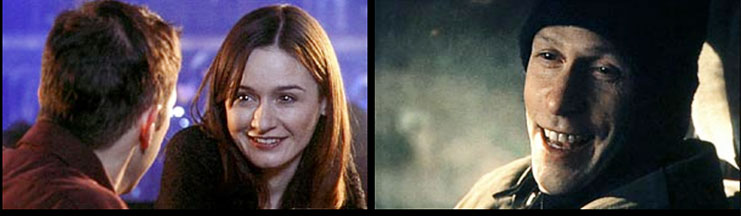
+++
By PAUL FISHER for DARK HORIZONS
The final film of the evening was a major surprise and easily one of the best films at Sundance thus far: A Foreign Affair. This wonderful charmer casts David Arquette and Tim Blake-Nelson as two brothers who need household help on their farm after their mother passes away. They decide to join a romance tour to Russia to find and bring home a traditionally minded wife. One wife for both, that is. Partly comic in an absurdist way and partly very human, A Foreign Affair is a wry comment on the whole notion of romance tours. Yet at the same writer Geert Heetebrij and director Helmut AUISchleppi have also crafted a succinct film about brotherly love, dependence, patriarchy and marriage, in a briskly directed romantic comedy/drama that takes audiences by surprise. Beautifully shot on location in St Petersburg, the film boasts memorable work by Blake-Nelson and Arquette who have never been better as they are here. Exemplified by a soft musical score, A Foreign Affair is one of the sleeper hits at Sundance. It is surprises such as this that makes Sundance such a pleasurable experience.
+++
- Foreign Affair, A
Our Reviewer Says: "Better than any five romantic comedies out there...not that that's saying much."
- Scott Weinberg (Worth A Look)
(SCREENED AT THE 2003 SUNDANCE FILM FESTIVAL) - American romantic comedies, for the most part, suck. Let's face it: the studios will always keep churning out the exact same female wish-fulfillment chaff as long as the grosses stay around $60 million domestic. Which means we'll see more Kate Hudson/Sandra Bullock/Meg Ryan movies that offer nothing new, nothing funny, and absolutely nothing worthwhile. And watch: a clever little romance like this one will struggle to earn one-fifth of J. Lo's latest paycheck.
If you're expecting the same old mistaken identity/idiots in love with the wrong person formula schtick, leave those expectations at the door with this movie. A Foreign Affair may not be a revolutionary tale in its own right, but it succeeds mainly by not being the 'same old thing'. Plus it's sweet in some spots, funny in others, and oddly touching throughout.
Tim Blake Nelson (O Brother Where Art Thou?) and David Arquette (Eight Legged Freaks) star as Josh and Jake, two small-town vegetable farmers and brothers who know next to nothing about women. When their doting old mother passes away in the night, the brothers' biggest concern (aside from the burial of course) is finding a new woman to take care of them.
Now before you get your panties in a bunch, keep in mind that these guys are fairly slow. Not stupid or near-retarded like you'd see in a sitcom, but just a bit naive - and more than a little lacking in social skills. Their plan to 'share' a wife is borne from their inability to cook and keep a suitable house; sex is not a priority. Imagine two overgrown (and surprisingly endearing) boys looking for a suitable nanny.
Since these guys have virtually no chance of landing a lady through conventional methods, Josh books two tickets to Russia as part of the "Foreign Affair" singles program. In theory, it's a great outfit: lonely men looking for wives attend a series of 'socials', meet-markets intended to pair up single men with green card-hungry gals. Only when you inject the whole "love" concept does the program seem a bit...icky.
But these boys aren't exactly looking for love, and that's one of the main reasons that A Foreign Affair is a surprisingly unique little flick. Much like last year's wholly underrated Birthday Girl, loneliness (and not horniness) is what sets things in motion.
Tim Blake Nelson is a great actor. If all you know of this guy is his work in O Brother and Minority Report, you're missing a lot. Though an untraditional sort of 'leading man', Nelson owns this movie whole. More of a surprise is the excellent work by David Arquette, who deftly avoids the wide-eyed hysterics that he usually employs. The guy's certainly no Olivier, but A Foreign Affair marks a confident step forward for the former 1-800-COLLECT pitchman.
Intent on stealing the heart of every man who sees her is an actress named Emily Mortimer. American audiences know her best from flicks like Scream 3 and The Kid, though her stunning turn in indie flick Lovely and Amazing is something that deserves to be seen. This time around, Mortimer plays a British documentarian alternately fascinated and bemused by the whole "Foreign Affair" scenario. Needless to say, the actress is great here, bringing a down-to-earth 'everygirl' sensibility to her role - one that's entirely necessary for one to accept the late-stage romantic entanglements.
Overall, the flick's a charmer; an unassuming and quietly confident little movie that delivers affable characters, a clever concept, some winning visual flairs, and a few mild lessons along the way. All in all, a solid indie that should manage to find a small (yet appreciative) audience. A Foreign Affair is an altogether enjoyable diversion, a light and clever comedy that offers some great performances in a unique setting. Plus it's about ten times more sincere and entertaining than what normally passes for romantic comedies these days. Keep an eye on your local 'art houses' and toss this one a few bucks when it stops by.
Worth A Look Scott Weinberg - 01/28/03
+++
By SCOTT FOUNDAS for DAILY VARIETY
Writer Geert Heetebrij and director Helmut Schleppi's "A Foreign Affair" is built around a real Web site (aforeignaffair.net) that organizes European romance tours for American bachelors seeking foreign brides. But pic isn't nearly as crass as the product-placement premise makes it sound. In fact, it's anything but a ringing endorsement of its Internet-matchmaking sponsor, finding much to be skeptical about at the idea of love-at-first-byte. Slight, but charming pic, acquired for U.S. release during Cannes market by Innovation Film Group, should attract some attention thanks to its odd premise and winning cast, but seems a much surer bet for ancillary success. Pic is an odd concoction: an English-language movie made by Dutch filmmakers working with an American cast on location in Russia and Mexico. That strangeness, combined with sharp casting and affectionate performances, is a big part of "Affair's" charm.
On a farm, somewhere in the Western U.S. (though South-of-the-border filming doesn't quite match), brothers Jake (Tim Blake Nelson) and Josh (David Arquette) must find a replacement who can assume the cooking, cleaning and other housekeeping duties that have gone undone since their mom (Lois Smith) recently died.
Since the brothers don't have the money to hire help, Jake decides he and Josh need a wife -- and can make do with one woman to look after them both. When efforts to find a game local girl fail, Jake discovers the Foreign Affair Web site at the local library, with help from amusingly played librarian Allyce Beasley.
Before long, the brothers are off to St. Petersburg to meet a series of prospective brides --and the scenes in which Jake interviews his finalists are among the funniest in the film. Meanwhile, for Josh, who's always lived life in his older brother's protective shadow, Russia is a bold revelation -- he emerges from his dreary, unkempt shell and decides he wants a girl he loves rather than one Jake finds acceptable.
It's fun to watch the talented Arquette go through Josh's transformation, shedding his baggy, farm-boy overalls in favor of Euro-chic partywear in his comically self-serious bridal pursuit. Nelson does a minor variation on the twangy, down-home Southerner routine he's perfected in movies like "O Brother, Where Art Thou?" and "Holes." Director Schleppi keeps the audience at a distance from the characters; there's no sense of what's going on inside their heads and hearts. It takes a wonderful turn from Emily Mortimer ("Lovely and Amazing," "Young Adam") playing a TV journo making a docu about the romance tour experience to keep up interest enough to get to the cleverly orchestrated surprises in pic's final moments.
With her cautious approach to the tour itself and to Jake (whom she finds herself falling for), Mortimer's Angela is the calm at the center of "A Foreign Affair's" irrational storm; she gives the whole airy enterprise some weight. And the disarming, hilarious excerpts from Angela's documentary (composed of real interviews conducted by Mortimer with real Foreign Affair customers during the making of the film) are by far the best thing in the movie.
Pic's production values veer toward minimalist, though "Northfork" d.p. M. David Mullen's video lensing makes tidy use of some scenic Russian locales.
Camera (color, DV), M. David Mullen; editor, Schleppi; music, Todd Holden Capps; sound, Gilles Kuiper, assistant director, David J. Bijker. Reviewed at IFP Los Angeles Film Festival, June 19, 2003. (Also in Sundance, Cannes film festivals.) Running time: 98 MIN.
© Copyright 2003, Reed Business Information, a division of Reed Elsevier Inc. c 2003 Variety, Inc.
+++
Review - 'A Foreign Affair'
Dutch Review
The final film of the evening was a major surprise and easily one of the best films at Sundance thus far: A Foreign Affair. This wonderful charmer casts David Arquette and Tim Blake-Nelson as two brothers who need household help on their farm after their mother passes away. They decide to join a romance tour to Russia to find and bring home a traditionally minded wife. One wife for both, that is. Partly comic in an absurdist way and partly very human, A Foreign Affair is a wry comment on the whole notion of romance tours. Yet at the same writer Geert Heetebrij and director Helmut AUISchleppi have also crafted a succinct film about brotherly love, dependence, patriarchy and marriage, in a briskly directed romantic comedy/drama that takes audiences by surprise. Beautifully shot on location in St Petersburg, the film boasts memorable work by Blake-Nelson and Arquette who have never been better as they are here. Exemplified by a soft musical score, A Foreign Affair is one of the! sleeper hits at Sundance. It is surprises such as this that makes Sundance such a pleasurable experience.
~~~
Found this movie in the stack of DVDs at the vacation condo we were renting on Maui this past spring. My wife had done such a great job looking at possible vacation rentals in Lahaina and finding us a studio condo, on the 5th floor of the Lahaina Shores Beach Resort. From the deck we looked out over the Pacific Ocean. The sunsets were magnificent. Lahaina was once the capital of the Kingdom of Hawaii and the center of the global whaling industry. It's the largest community in West Maui with lots of restaurants, fine art galleries, and shopping. It's also centrally located to many of the beautiful beaches on Maui's western coast. The evening we watched Two Brothers & a Bride (aka Foreign Affair), we had spent a rigorous day hiking in the Haleakala Crater. At just over 10,000 ft elevation Haleakala (which in Hawaiian means “House of the Sun”) National Park is one of the top 5 things to do in Maui. We had taken the Halemu’u trail, a 7.6 mile steep switchback trail from the summit. We went in and out of the clouds which was awesome. At the advice of friends who had hiked this trail, we had parked at Halemau'u trailhead and hitched easily up to summit. By the end of our seven hour hike, we decided to chill the rest of the afternoon snorkeling at Black Rock at Kaanapali Beach. By evening we were wiped out and decided to get take out and watch a movie. We were pleasantly surprised by A Foreign Affair. We thought it was a light and clever comedy that offered some great performances. Check it out.
~~~
PRODUCTION
- TONNEKE BIJKER
- GEERT HEETEBRIJ
- HELMUT SCHLEPPI
- DAVID J. BIJKER
CREW
- M. DAVID MULLEN
- AMY SEGAL
- ESLI BIJKER
- CLIFF HSUI
- TODD HOLDEN CAPPS
PRODUCTION
AMY SEGAL
LINE PRODUCER
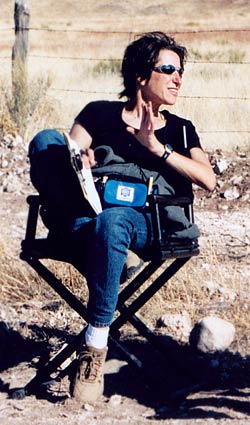
Amy Segal has 13 years of experience as a production manager, line producer, unit manager and location manager for film and television productions on location in countries around the world. She lived in Russia for 6 years working on films including, Golden Eye (Eon Productions), Ready to Wear, Marina's Story (TV), Back in the USSR (Columbia) and later lived in South-East Asia working on television productions and feature films including Entrapment (Fox), Anna and the King (Fox), and The Lost Empire (Hallmark Entertainment).
DAVID J. BIJKER
EXECUTIVE PRODUCER
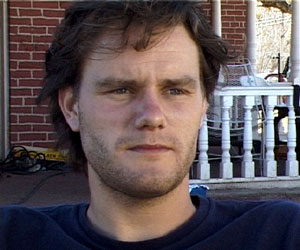
Dutch executive producer David J. Bijker majored in Television and Journalism in the Netherlands, and operates his own TV production company. Following the death of his father Dirk-Jan Bijker, David became part of Black & White Films and joined "A Foreign Affair" as executive producer.
GEERT HEETEBRIJ
WRITER
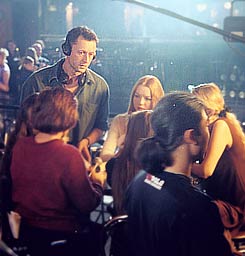
Dutch writer-producer Geert Heetebrij is a graduate of Calvin College in Michigan and the Los Angeles Film Studies Center in California. From 1996 through 1999, Geert was story editor for Eo Productions in Santa Monica, California.
In the summer of 1999, he and Helmut Schleppi started Dreamscape Films, making a number of TV productions together before producing their first feature.
DAVID MULLEN
DIRECTOR OF PHOTOGRAPHY
Meet Me in St. Petersburg
by M. David Mullen
In the fall of 2001, I met with two Dutch filmmakers, Helmut Schleppi and Geert Heetebrij, at some coffee shop in West Hollywood. Geert had written a screenplay called "A Foreign Affair", a comic tale about two hapless brothers who leave the seclusion of their farm after their mother dies, in search of an "old-fashioned" wife to take over the household chores. They travel to St. Petersburg, Russia as part of a tour group advertised on the internet to meet Russian women desperate to get married and live in America.
Moving from a successful career making video documentaries, often shot in remote locations around the world, Helmut and Geert told me that they were interested in shooting their first narrative feature in a similar manner - on video with a small crew and very little equipment. Someone recommended me because of my experience shooting the 24P HD features "Jackpot" and "New Suit," but it was my 35mm work in "Twin Falls Idaho" that particularly impressed Helmut.
Helmut originally wanted to operate the camera, as this was natural for him as a documentarian. I was hesitant, since composition is as important to me as lighting, but once Helmut added that most of the film would be shot handheld for three weeks straight, suddenly the prospect of watching from the comfort of a chair in front of a video monitor seemed more appealing. Because the film was to be shot "documentary" style in 24P HD, the producers chose a compact equipment package and crew because they wanted to be able to shoot an actual romance tour in Russia without interfering too much with its reality. The idea was to get as close to the real thing as possible. In the end, the prospect of travelling to Russia, the quality of Geert's script, and the chance to work with actors Tim Blake Nelson, David Arquette, and Emily Mortimer were enough to overcome my apprehensions over the many unknowns.
While shopping around for an HD package, Jeff Blauvelt of HD Cinema in Santa Monica introduced us to a private owner/operator named Peter Good, who was willing to rent us a very basic package at a very low rate (a Sony HDW-F900, 7.8mm-156mm Fujinon HD zoom, 14" HD monitor, 9" NTSC monitor, Miranda downconverter, tripod, plus an HMI SunGun.) We were also getting a Sony PAL Digital Betacam package to shoot some second unit documentary footage of an actual "wife shopping" tour. Since we had no idea how much PAL Digital Betacam documentary footage would be incorporated into the final movie, I suggested we shoot the entire movie at 25P instead of 24P, rather than have Helmut deal with two different frame rates later in editing. 25P would also make dealing with Russia's 50hz power supply a little easier. Esli Bijker DP'd the second unit material in DigiBeta PAL. His family's production company in the Netherlands co-produced the feature.
Since we would be shooting without a generator for most of the show, I needed a very small but power-efficient lighting package for both daylight & tungsten interiors. The budget only allowed for two Russians to serve as my entire grip & electric crew. Helmut's idea of a minimum lighting package was one suitcase of small tungsten lamps, but I usually use Kinoflos in these situations, being switchable between daylight and tungsten, low in wattage, and naturally soft and pleasing on actors' faces with a minimal amount of supporting grip equipment. I also had two 575 watt HMI's, a Dedolight kit, a Kinoflo car kit, Peter Goode's HMI Sun Gun, and a few small tungsten lamps. On our few large night exteriors, we rented a generator. On some occasions, a 4K HMI PAR was my "bolshoy" (big) light and other times it was a 10K tungsten fresnel.
My camera assistant, Cliff Hsui, arrived with the package a few days before the first shooting day. I originally thought I could use the mattebox from the betacam package, but after various experiments failed, I had to consider shooting without any mattebox at all (and thus none of the few 4x4 filters we had gotten from Holland as well), using only the small sunshade that came with the lens. I then programmed the F900 camera with the same settings I used for "New Suit", which was fairly conservative, designed to give me the most flexibility in color-correction later. I like to shoot with the master black level very marginally lifted just to make sure nothing is getting buried in the shadows - later in post, I restore the blacks. I also try to keep my highlight exposures on the "down" side. The idea is to create something like a "digital negative" - a little flatter than normal so that one can add more contrast in color-correction later (it's always easier to take out information than add it when it was never recorded to begin with.) I also use a very low-level of edge enhancement - i.e. "Detail" -- when shooting HD for transfer to film; this partially makes up for HD's lower resolution over 35mm, and if you use it carefully, most viewers can't really see the enhancement in the projected 35mm print. However, fine details seem to "pop" into focus compared to shooting with Detail turned off.
At first I thought I could live with a clean, unfiltered image for this movie, but as the story's romantic qualities became more evident, I realized that the image needed some mild amount of diffusion to create the right mood. Afterall, a large part of the story involves the two lead males being confronted, seduced, rejected, etc. by one attractive Russian lady after another. Using strong duct tape and some blackwrap for a lens hood, I taped some diffusion filters directly to the lens barrel. The #1/4 Black ProMist did a great job of softening the close-ups without looking like diffusion was being used, and it intercut with the sharper wide shots very well.
About a month after we wrapped our Russian shoot, we got back together to shoot the opening scenes on the main characters' farm. Although the script placed this location somewhere in the United States, we ended up shooting in Casas Grandes, Mexico on a remote Mormon farming community. Since we were still shooting in 25P but now in a 60 hz country, I had a few light sources (LED clocks, overhead fluorescents, etc.) that were flickering, but I was able to remove this with the F900's ECS function.
In late May 2002, we on-lined the movie, completed the sound mix and the final color-correction at Victory Studios (formerly APS) in Seattle, using a 2K DaVinci. There were a few wide-angle shots throughout the movie meant to represent the point-of-view of a brass urn (holding the ashes of the brothers' deceased mom). In the online room, editor Walt McGinn was able to create a pincushion distortion to suggest the rounded base of the urn, and then in the DaVinci, colorist John Davidson desaturated the image and then added over it a yellow-brassy hue, plus softened the corners using Power Windows. Overall, the movie took only two days to color correct; in general I've found that HD color-corrections tend to go faster than a film telecine transfer / color-correction session because the HD image recorded on the set is more consistent exposure and color-wise from shot-to-shot. Victory Studios (APS) made the transition to editing in 25p seamless.
One of the great pleasures of shooting "A Foreign Affair" was working with Helmut, Geert, the Bijker brothers, Amy Segal, our lead actors, plus some great crew people in Russia and Mexico. Everyone came together on this modest project to make it truly an affair to remember